Showing posts with label travel. Show all posts

Sunday, September 13, 2015

Discover Baltics : Estonia, Latvia, Lithuania

Baltics : Europe's best kept secret!

When you think of Europe, you usually think of London, Paris, Madrid, Barcelona, Berlin, Amsterdam, Rome and so on... all those flaring diamonds that sparkle so brightly that the other precious stones of Europe are unfairly outshone. But it only takes polishing a stone to recognize precious it actually is. The same goes with Eastern Europe- a place that is relatively unexplored by the ordinary tourist, and yet, that possesses spots so beautiful, so unique,  and so fresh it only takes an instant to fall in love with them.


You don't tend to hear a lot about travel to the three countries that make up the Baltic States - Estonia, Latvia and Lithuania, but that may be about to change. Located on the eastern coast of the Baltic Sea, these formerly Russian province and republics of the former USSR, found their independence a mere  15 years ago. Despite their shared past and geographic grouping, the Baltic States each have a very different character and language. They are sparsely populated countries featuring well-preserved medieval cities, a young population and the main cities offer great cultural opportunities and all the modern amenities. Although they are situated close to Scandinavia and share a similar landscape to Sweden and Finland, they boast a lifestyle that is more reminiscent of Italy or Spain. Rich in culture and history. These venerable old capital cities are waiting to be discovered. Slowly and quietly, these countries have been developing their tourism industry. We met a lot of tourist mostly from Europe,  that are flocking to these affordable, safe, relatively inexpensive and historic yet constantly reinventing themselves destinations. English is widely spoken in the larger cities of the each countries.


Estonia

Tallinn
Ever since i was in Europe, i've always wanted to see Estonia, and what's in it. and finally i did it.

Known for its cobblestone streets, long history and stunning gothic architecture, Tallinn never fails to amaze visitors with its historical charm. Tallinn is comfortably located between St. Petersburg, Stockholm and Helsinki, which are major travel destination worldwide. So, visiting Tallinn seems like an obvious choice. We couldn't get to visit Helsinki and St Petersburg due to limited time, but Tallinn has been awesome. Tallinn is a stunning place in its own right. It has this unique balance between history and modernity, being listed both in the UNESCO World Heritage list and the Top 10 digital cities in the world list. Tallinn is soooo cool!


Kadriorg Palace

This baroque palace was built for Peter the Great in 1718 and it has became the Art Museum of Estonia's foreign collection. A trip to Tallinn isn't a trip to Tallinn without a visit to the northern Baroque palace. This palace was designed by an Italian architect, Niccolo Michetti. Its surrounding manicured gardens are a humbling example of Tsarist (Russian empire) extravagance.


The Medieval Old Town


Tallinn never fails to amaze visitors with its historical charm. At its heart is the Medieval Old Town, an area of cobblestone streets, gabled houses, churches, squares that developed here from the 13th to the 15th centuries when Tallinn boomed as a key Hanseatic commercial hub. Nowadays, Old Town has been the main draw for newcomers; in fact it's so unique that UNESCO added to its. World Heritage List in 1997.


The medieval center of Tallinn is said to be the most beautiful and attractive city center in the Baltic countries. There is a reason for it being one of the most popular destinations in north Europe. It is one of the best preserved medieval towns in northern Europe without architectural influences from each of the countries that ruled it through centuries - Denmark, Sweden, Germany, and Russia. You just have to see this for real! :)


Latvia

Riga
Riga is Latvia's capital. Despite being heavily damaged by bombing raids during World War, architecture buffs will note that Riga still has the largest  number of Art Nouveau buildings in Europe and the center of the Old Town is listed as a UNESCO World Heritage site.

In Riga, the past is alive – and complicated. The road that the monument stands on is now called Brivibas bulvaris (Freedom Boulevard), but its previous names – Alexander, Hitler and Lenin – are a clue to the city's history of rule by foreign powers. It was founded in 1201 as a base for crusading German knights, and for three centuries it thrived as one of the Baltic ports in the Hanseatic League. In turn, Riga then became part of the Polish-Lithuanian Commonwealth, and then the Swedish and Russian empires. You can sense this history in the cobbled streets of Riga's old town, which is bounded by the river Daugava and the city canal (previously a moat), and in its architecture – best expressed in the flowing lines of the largest collection of art nouveau buildings in the world.


Liepaja
Liepaja is situated in the south-west of Latvia, 220km from the capital, Riga. The city is surrounded by water on two sides - the Baltic Sea on the west, Lake Liepaja on the east, and a trade channel in the middle connecting both banks. Its proximity to water has also influenced the historical development of the town. In terms of population, Liepaja is the third largest city in Latvia.


Liepaja is also known as the city of wind. The wind blows over the blue waves of the sea, over the the port, the modern architecture and centuries of history to continue on its way all through Latvia.


Lithuania

Vilnius
Vilnius is the capital and heart of Lithuania. Almost 700 years old, it once again features a combination of eastern and western architecture with monumental buildings, palaces, museums, and a robust nightlife. It was one of the largest cities in Europe during the 16th Century and a crucial part of the vast Polish empire that stretched between the Baltic and Black Seas. Often referred to as the "Baltic Jerusalem", the city enshrines remnants of ancient Lithuanian, Jewish and Polish cultures which can yet be found in the old town. Like its sister capital cities of Riga and Tallinn, the Old Town is also a protected UNESCO World Heritage site.


Kaunas
Kaunas is Lithuania's second largest city with a population of 325 000 people. It is located at the confluence of country's two largest rivers, Neris and Nemunas. For centuries, it has been smaller than Vilnius. What makes Kaunas really unique is, however, its heritage from later eras. It is here where the Russian Empire built a 1st class fortress (1882 - 1915), its forts, batteries, barracks and redoubts surrounding the entire Kaunas city. The majority of these fortifications can still be seen today and are in fact the best preserved 19th century fortress of this type in the world.

Senamietis (Old Town) of Kaunas
Kaunas medieval Old Town is smaller but more intact than that of Vilnius as it suffered less of the Soviet post-war destruction. It is dominated by the churches at the Rotušės (City Hall) square and a wide Vilniaus street as well as by the restored Kaunas castle near the confluence.


Klaipeda  , the Curonian Spit (Nida)
A trip to the remarkable Curonian Spit that runs along the southeastern coastline of the Baltic Sea is a highlight of any visit to Lithuania. The spit, split between Lithuania and Russia's Kaliningrad province, extends south from the Lithuanian seaport of Klaipėda. It is named after one of the early Baltic tribes that inhabited the region, is a curious place, a 60 mile-long finger of sand that stretches upwards from Russian Kaliningrad to within a handshake of the Lithuanian mainland, separating the waters of the Baltic Sea from the Curonian lagoon.


The northern 32 miles of this peninsula belong to Lithuania, accessed by ferry from the port of Klaipeda. Make the short hop across the strait and you reach a National Park and Unesco World Heritage Site of astonishing beauty.
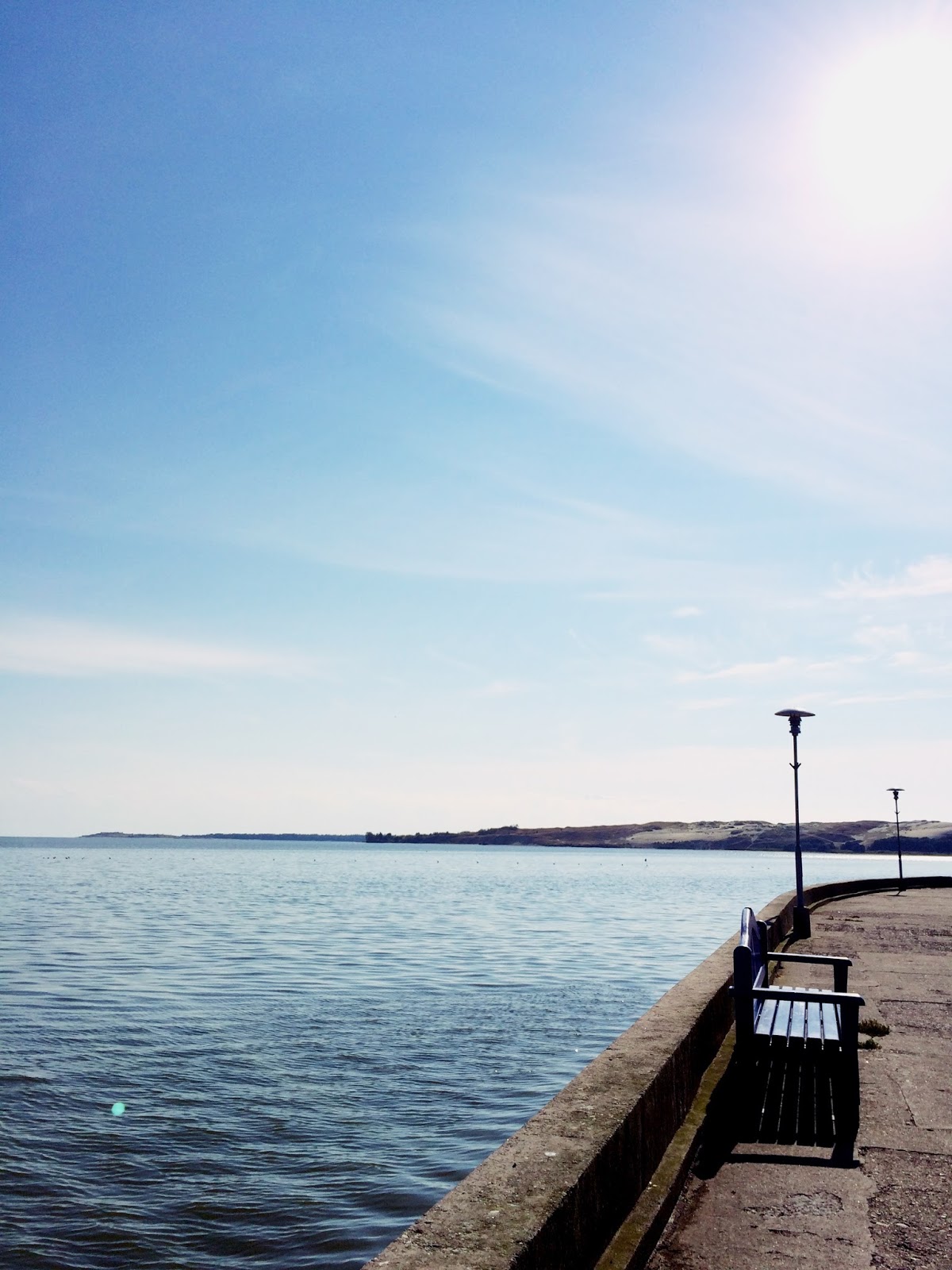


If you prefer somewhere a little less quiet, more authentic with a European charm then I definitely recommend Lithuania. But, i love all of them. However, Lithuania is more untouched by tourism than Latvia and Estonia and Vilnius is my favorite capital, other than Riga and Tallinn. 


Saturday, July 25, 2015

5 Main Language made EASY for EURO-TRIP! (exclude English)


ok, let's be honest, it's absolutely possible to get around Europe fairly easily without speaking any language other that English. But that doesn't mean you shouldn't try to understand more language other than English. This can be difficult if you're visiting multiple countries, but learning at least a few words and phrases isn't just helpful, it's a good way to show your respect to your hosts, and this is definitely the easiest way to get new friends! You are guests in a foreign land and you should always remember that. People will warm up and be more helpful if you can demonstrate at least an effort to try to communicate. You'll also learn a lot more about the local culture that way too!

so let's get started!


Italiano!
Ooomaguccii, i have the Italian! Here in Italy, the word ALLORA! is famously used. It seems on my last trip, the most intriguing toss away word was this. It is little bit of a mysterious word that you will hear A LOT among Italians. ALLORA is a very useful word, can be use for many things and still not mean anything by it.

For example, Allora lasci! Let it be!


English (Inglese)
Italian (Italiano)
Pro-nun-cee-YAY-shun
thank you
grazie
GRAT-tzee-yay
please
per favore
pair fa-VOHR-ray
yes
si
see
no
no
no
Do you speak English?
Parla Inglese?
PAR-la een-GLAY-zay
I don't understand
Non capisco
non ka-PEESK-koh
I'm sorry
Mi dispiace
mee dees-pee-YAT-chay
How much is it?
Quanto costa?
KWAN-toh COST-ah
That's too much
É troppo
ay TROH-po
Good day
Buon giorno
bwohn JOUR-noh
Good evening
Buona sera
BWOH-nah SAIR-rah
Good night
Buona notte
BWOH-nah NOTE-tay
Goodbye
Arrivederci
ah-ree-vah-DAIR-chee
Excuse me (to get attention)
Scusi
SKOO-zee
Excuse me (to get past someone)
Permesso
pair-MEH-so
Where is?
Dov'é
doh-VAY
...the bathroom
il bagno
eel BHAN-yoh
...train station
la ferroviaria
lah fair-o-vee-YAR-ree-yah
to the right
à destra
ah DEH-strah
to the left
à sinistra
ah see-NEEST-trah
straight ahead
avanti [or] diritto
ah-VAHN-tee [or] dee-REE-toh
information
informazione
in-for-ma-tzee-OH-nay


Bongourno! (good morning)  Learning a few words and common phrases will make a big difference in your experience. Trust me! JRather than launching immediately in English and assuming you will be understood, it's polite to ask, ''Parla I'nglese? (do you speak English?) 


French!


There's 65 million people speaks French worldwide. It's the official language in France, or one of the the official language of Canada, Belgium, Switzerland, Monaco, Madagascar, Tahiti, Senegal, and numerous other countries around the world. More than 220 million people speak French on all the five continents. It is second most widely learned language after English and 6th most widely spoken language in the world. So, lets learn a bit of French, shall we???


English
French
Pro-nun-cee-YAY-shun
thank you
Merci beaucoup
Mare-see boo koo
Mr./ Mrs / Miss
Madame/Monsieur/Mademoiselle
mah-dahme/ muh-syuhr/ mah-dah-mwa-sell
Hello
Bonjour
Bonn-zhoor
Please
S’il vous plaît
Seal voo play
yes
Oui
Wee
no
Non
No
Do you speak English?
Parlez-vous anglais?
Par - lay vooz ah(n)-glay?
I don't understand
Je ne comprends pas
Zhuh nuh comp-rond pah
I speak (a little French)
Je parle (un peu de) français
Zhuh parl (uhn peh) frahn-say
Please speak slowly
Parlez lentement, s'il vous plait
Par-lay lawn-the-mont, seal voo play
Excuse me
(to get attention or to past someone)
Excusez-moi
Pardon
Ex-kyou-say mwa
Par-dohn
Can you help me?
Pouvez-vous m'aider ?
Poo-vay voo meh-day?
I am looking for…..
the bus/train/subway.
Je cherche……..
le bus/train/métro.
Zhuh shairsh . . .
Where is the nearest stop?
est l’arrêt le plus près?
Goodbye (until we see each other again)
Au revoir!
Ah reh-vwarh
Good bye (see you later, on the same day)
À tout à l'heure
Ah toot ah luhr
Good bye (forever/I’m never going to see you again)
Adieu
Ah-dyooh
Excuse me (to get attention)
Pardon
Par-dohn
Excuse me (to get past someone)
Excusez-moi
S'il vous plaît
It’s great!
……good
….…bad
…….terrible
C'est chouette!
….bon
………mal
……….terrible
Say shwet!
Bohn
Mahl
Tare-eee-bleh
How much is it?
Combien?
Cohm-bee ehn
Where is the restroom?
sont les toilettes?
Oo soh(n) lay twa-let?
Would you take our/ my picture, please?
Est-ce que vous prendriez notre/ma photo, s'il vous plaît?
Esk-kuh voo pren-dray noh-tra/mah foh-toh, seal voo play?


I'm pretty sure, the ability to speak even a little French makes it so much enjoyable to visit Paris and all the regions of France, and offers insights into French culture, mentality and way of life. Don't worry, there's no loss of learning French because French also comes in handy when travelling to Africa, Switzerland, Canada, Monaco, the Seychelles and other places.


Germany; Deutschland (language : Deutsch)


You hear it all the time! Don't worry, everybody in Germany (+ Austria/Switzerland) speaks English. You'll get along just fine without any German. But if you're here at the Deutschland or the land that speaks Deutsch, your life will be much easier. First of all, not everyone in German Europe does speak English. And even if they did, to certain people, sometimes they feel how rude of anyone going there not to bother learning at least the basics of the language.

Tschakaaa!!! (COME ON! it's how they motivate each other)

English
Deutsch
Pro-nun-cee-YAY-shun
yes / no
ja / nein
yah/nine
please/thanks
bitte/danke
bit-tuh/dahn-kuh
Thank you very much
Vielen dank!
fee-len dangk
You're welcome.
Bitte.
bit-tuh
You're welcome. (for a favor)
Gern geschehen.
ghern guh-shay-un
Excuse me!
Entschuldigen Sie!
ent-shool-de-gen zee
Where's the restroom/toilet?
Wo ist die Toilette?
vo ist dee toy-let-uh
left / right
links / rechts
linx/rechts
Man/Gent’s Room
Mann/Herren
man/hair-ren
Woman/Ladies Room
Frau/Damen
frau/dar-men
Hello! (informal)
Hallo!
hal-lo
Hello!/Good day!
Guten Tag!
goo-ten tahk
Good-bye!
Auf Wiedersehen!
owf vee-der-zane
Good morning!
Guten Morgen!
goo-ten morgen
Good night!
Gute Nacht!
goo-tuh nahdt
My name is...
Ich heisse...
ich hye-suh
I am...
Ich bin... (ich bin)
ich been
Do you speak English?
Sprechen sie Englisch?
spreck-hen zee englisch?
I understand  (do not)
Ich vestehe (das nicht)
ich fer-stay dass nicht
Do you have...?
Haben Sie...?
hah-ben zee
Where is….
Wo ist....?
voh ist....?
a room
ein Zimmer
eye-n tsim-air
a rental car
ein Mietwagen
eye-n meet-vahgen
a bank
eine Bank
eye-nuh bahnk
the police
die Polizei
dee po-lit-zye
the train station
der Bahnhof
dare bahn-hof
the restroom
Toilette/WC
toilet/way-see


Spanish!
In Malaysia, when i was little, i watched of a lot Latinos! I still remember ponteng sekolah agama just to watch Mexicanos; La Usurpadora, Maria Mercedes, Rosalinda, Mis Tres Hermanas, Ugly Betty, you name it all!


Spanish is one of the easiest foreign languages to learn. There's a lot of it's vocabulary is similar to English's and written Spanish is almost completely phonetic. Look at almost any Spanish word and you can tell how it is pronounced. Furthermore, Spanish is spoken by at least an estimated 350 million people worldwide and is currently the 4th most commonly spoken language worldwide! Geographically, a large number of countries have Spanish as it's dominant language. Spain, the United State, various parts of South America ;Venezuela, Argentina. Chile, Paraguay, Bolivia, Columbia, Puerto Rico, the Dominican Republic, Uruguay and even in Philippines. So, knowing Spanish opens the door for you to communicate with 1/3 of a billion speakers worldwide!
ENGLISH
SPANISH
Pro-nun-cee-YAY-shun
Yes
see
No
no
noh
Please
por favor
pohr fah-bohr
Thank you
gracias
grah-see-ahs
You’re Welcome
de nada
day-nah-thah
No, thank you
no, gracias
noh, grah-see-ahs
"Excuse me." or "Pardon me."
discúlpeme
dees-cool-pay-may
Good morning
Buenos días
bweh-nohs dee-ahs
Good afternoon
Buenas tardes
bweh-nahs tahr-days
Good evening
Buenas noches
bweh-nahs noh-tchays
Good bye
Adiós
ah-dee-ohs
Hello/Hi
hola
oh-lah
See you later
hasta luego
ahs-tah lway-goh
What is your name?
Cómo se llama?
koh-moh say yah-mah
My name is…
mi nombre es ...
mee nohm-bray ays...
How are you?
Cómo estas?
koh-moh ays-tahs
Fine, thank you.
Very good, thank you.
Bien, gracias
Muy bien, gracias
bee-ayn grah-see-ahs
mooee bee-ayn grah-see-ahs
Do you speak English?
Hablas inglés?
ah-bla een-glays
I don’t understand.
no entiendo.
noh ayn-teeayn-doh
Where is/are…?
Donde está/están…?
dohn-day ays-tah  / ays-tahn
When?
Cuando?:
A cuál hora?
kwahn-doh 
ah kwahl oh-rah
Who?
quién?
keeayn
Why?
por qué?
pohr kay
What?
qué?
kay
How long…? (time)
cuanto tiempo?
kwahn-toh teeaym-poh
How much does it cost?  or you can simply say:
cuánto cuesta?
cuánto?
kwahn-toh kway-stah
kwahn-toh
How far?
A qué distancia?
ah kay dees-tahn-seeah
Can you help me?
Puede ayudarme?
pway-day ah-yoo-dahr-may
What time is it
¿Qué hora es?
kay oh-rah ays
I (don’t) like it
(No) me gusta
(noh) may goos-tah
I don’t know
No
noh say.
I need
necesito
nay-say-see-toh
I’m hungry
Tengo hambre
tayn-goh ahm-bray


Russian!


errrrr, why Russian? what does it have to do with traveling in Europe? Well, Russian is the official language of Russia and various places over the continents. It is spoken by 270 million people in Europe and Asia, covering Belarus, Kazakhstan, Kyrgyztan, parts of Georgia, Ukraine and since it is the lingua franca of the former USSR, this slavic language is widely used in parts of Soviet Union region, especially in eastern Europe. It might be hard to learn every language of each countries, so this is a good trick to survive while traveling in Eastern part of Europe. I have lived in Czech republic for 6 years so, but when i compare Czech language with Russian, there's a lot of similarities. I could also somehow use it in Poland, Croatia, Montenegro etc.


English
Russian
Pro-nun-cee-YAY-shun
thank you
Спасибо
spaSIbo
You are welcome
Не за что
ne za chto
Hello! (Formal)
Здравствуйте!
ZDRAstvuyte
Enjoy (You’re welcome for food)
– На здоровье
na zdaROVye
Hello! (Formal)
Здравствуйте!
(ZDRAstvuyte)
Hello (Informal)
Привет!
priVET
Please
Пожалуйста
poZHAlusta
Yes
Да
da
No
Нет
nyet
Do you speak English?
Вы говорите по-Английски?
vi govoRIte po angLIYski?
I don't understand
Я не понимаю.
ya ne poniMAyu
I don’t speak Russian
Я не говорю по-Русски.
ya ne govorU po RUSski
Help me, please?
Помогите, пожалуйста.
pomoGIte poZHAlusta
Excuse me
(to get attention or to past someone)
Прошу прощения
proSHU proSCHEniya
Help me, Please
Помогите, пожалуйста. (pomoGIte poZHAlusta)
Where is the….
the bus/train/subway.
Где ...?
Автобус/ метро
(Gde...?)
gde avTObus /meTRO?
Where is the nearest stop?
How are you?
Добрый вечер.
dObriy VEcher
I am fine, thank you.
Хорошо, спасибо
haraSHO, spaSIbo
What is your (Formal/informal) name?
Как вас/тебя зовут?
kak vas/teBYA zoVUT?
My name is…
Меня зовут
meNYA zoVUT
I am sorry
Извините
izviNIte
It’s nice to meet you
Приятно познакомиться.
priYATno poznaKOmitsa
Good morning
Доброе утро.
dObroye Utro
Good afternoon
Добрый день.
dObriy den’
Good evening
Добрый вечер.
dObriy VEcher
Good night
Доброй ночи.
DObroi NOchi
Where is the restroom?
Где туалет?
gde tuaLET?
Good bye
До свидания.
do sviDAniya
Here's some quick intro. The Slavic group of languages  is divided into West Slavic which includes Czech, Slovak, Polish, South Slavic covers Bulgarian, Croatian Macedonian, Serbian and Slovenian; and East Slavic which comprised of Russian, Ukrainian and Belorussian. Russian became on of the language of world communication; a global language as in the 20th century. So, let's learn some Russian with it's Cycrillic alphabet!


So, There you go! 5 main language that is widely used in Europe. I hope this will be useful for your Euro-trip. The list is by no means complete, but it should give you a fair idea of really the most basic words and phrasess for savvy backpackers, hoping that this can make your travels so much easier and friendlier. A hearty smile and an effort to speak to someone in their own language without feeling foolish can make memories to cherish for a life time. Good luck peeps! Tschuß!!!